How Professional Transport Services Improve Business Operations in India
Read More
Loading...
June 22, 2026
AAJ Swift


In the last decade, India's ecommerce market has witnessed astonishing progress. Consumers are increasingly shifting their preferences toward online purchasing, be it in metropolitan cities or in towns, to take advantage of shopping ease, a large number of choices of goods, affordable prices, etc. According to reports industry estimates, the Indian ecommerce market is likely to surpass $160 billion in 2028; this growth would be led by increasing Internet Penetration, smartphone usage, digital payments, consumer confidence in online shopping, etc.
While the ecommerce market is growing, the expectations of consumers are changing at the same pace. Consumers do not only judge companies based on the product quality or their prices but also based on how fast a customer order will be delivered. Customers now demand speed delivery, accurate delivery time, tracking for the parcel, and fuss free return policy that was earlier considered to be add-on benefits but is now standard.
As ecommerce delivery is now one of the major components of the customer journey, it affects the way customers perceive a brand. A customer may be happy with the website during his shopping spree but may feel disappointed if the delivery takes time, products are damaged, or if the customer does not get proper communication. Conversely, if they have a smooth and hassle-free delivery, they tend to be repeat customers and become brand loyalists.
This article will discuss What is Ecommerce Delivery, how ecommerce delivery works, types of ecommerce delivery models, common challenges, and technologies affecting ecommerce delivery in India.
Ecommerce delivery is the end-to-end transportation of a product from the point of purchase to the desired delivery location of the customer on an online platform. Though customers think that delivery is about handing over a parcel in the customer's hands, in reality it is more of a process where several steps of operations fall in line to meet at the last moment and hand over the package to the customer.
Once a customer places the order on any ecommerce platform, this leads to a chain reaction of events-the verification of the order, inventory check, picking and packing of the product, generating shipping labels, and transportation of the product, etc. Every stage contributes to a successful delivery of the customer order.
Ecommerce delivery service differs widely from the Traditional logistics system, where it would primarily be a large shipment from one point to another point-between manufacturers, distributors, wholesalers, and retailers. In the case of ecommerce, there would be millions of orders to deliver each day in different corners and directions with different demands like speed and convenience, unlike the traditional logistics' demand for mass transportation. A customer in ecommerce delivery can place orders for hundreds of units on a national distribution network. At the same time, the manufacturer could have sent millions of units of product to retailers through a truckload in a traditional logistic system.
To be able to identify scope of improvements in ecommerce delivery, businesses need to know what it is and how it works. From a customer's perspective, the process is quite straightforward, but technically numerous stakeholders and systems need to be synchronized for seamless order delivery.
The ecommerce delivery journey begins when a customer places an order through a website, mobile application, social commerce platform, or online marketplace.
Once the order is submitted, the ecommerce platform captures important information such as product details, quantity, payment method, and shipping address. The customer immediately receives an order confirmation through email, SMS, or app notifications.
At this stage, customer expectations are established. Clear communication regarding delivery timelines and order status helps build confidence and trust from the beginning of the purchasing journey.
Once the order has been confirmed, it moves to the order management phase. Contemporary ecommerce businesses use an Order Management System (OMS) to coordinate and process incoming orders. An OMS can check for the availability of inventory and automatically suggest the most appropriate fulfillment center.
If a business is operating multiple warehouses, an OMS can help route orders to the closest available facility, thereby cutting down delivery costs and time. The accuracy of the order management process lays the groundwork for an efficient ecommerce delivery, because errors here usually reflect in subsequent stages.
Following approval of the order, operations commence within the warehouse. Picking is the process of finding and gathering specified products from warehouse shelves and fulfillment locations. Barcode scanners and automated picking systems are now common practice and increase accuracy and reduce manual errors.
Packing offers many more benefits to a business than is apparent. Proper packing ensures that products are not damaged during shipping and also contributes to the overall customer experience. The choice of packaging materials can also influence shipping costs, sustainability goals, and customer perception of the brand.
After picking and packing have been done, the order needs to be shipped; it actually enters the logistic network. At this point, a shipping label for the order is generated. The label contains all essential data for efficient delivery, such as the recipient's name and address, contact details, product information, and tracking data.
An Air Waybill (AWB) number is generated that acts as the identity of the shipment throughout its transit. This allows the customer and business to track the parcel's journey in real time. If the order is intended for delivery within the city, then it would be handled by the hyper-local delivery service providers, while if it's on a state-level, it would enter the national network.
The package leaves the warehouse or fulfillment center and enters the logistic system and starts its journey from "First Mile Movement," meaning it begins its journey from seller to logistic system. Depending on the final destination, it can be transported via road, rail, air, etc.
Upon dispatch, it enters the transit hubs where products are sorted and processed based on the destination of the order; efficient sorting systems enable a logistics company to sort out thousands of parcels a day by minimizing errors and transit time. Suppose an order is placed from Delhi but delivered in the South of India, so first the order would reach at some designated transit point and then would go for transportation to southern India.
Last-mile delivery is often considered the critical and difficult aspect in ecommerce delivery services. The journey involves taking the customer order from a local distribution center or local hub right to the customer's door. It's a relatively short distance, but a complex one, as it costs the most in this entire process and it is the first physical interaction with a customer. Therefore, it impacts the customer's perception of the brand and service more. The package, on arriving at the local delivery point, is assigned to a delivery agent, and route optimization software decides the ideal sequence in which the deliveries need to be completed by the agent, keeping in mind factors like traffic conditions, delivery location priorities, and availability of delivery vehicles.
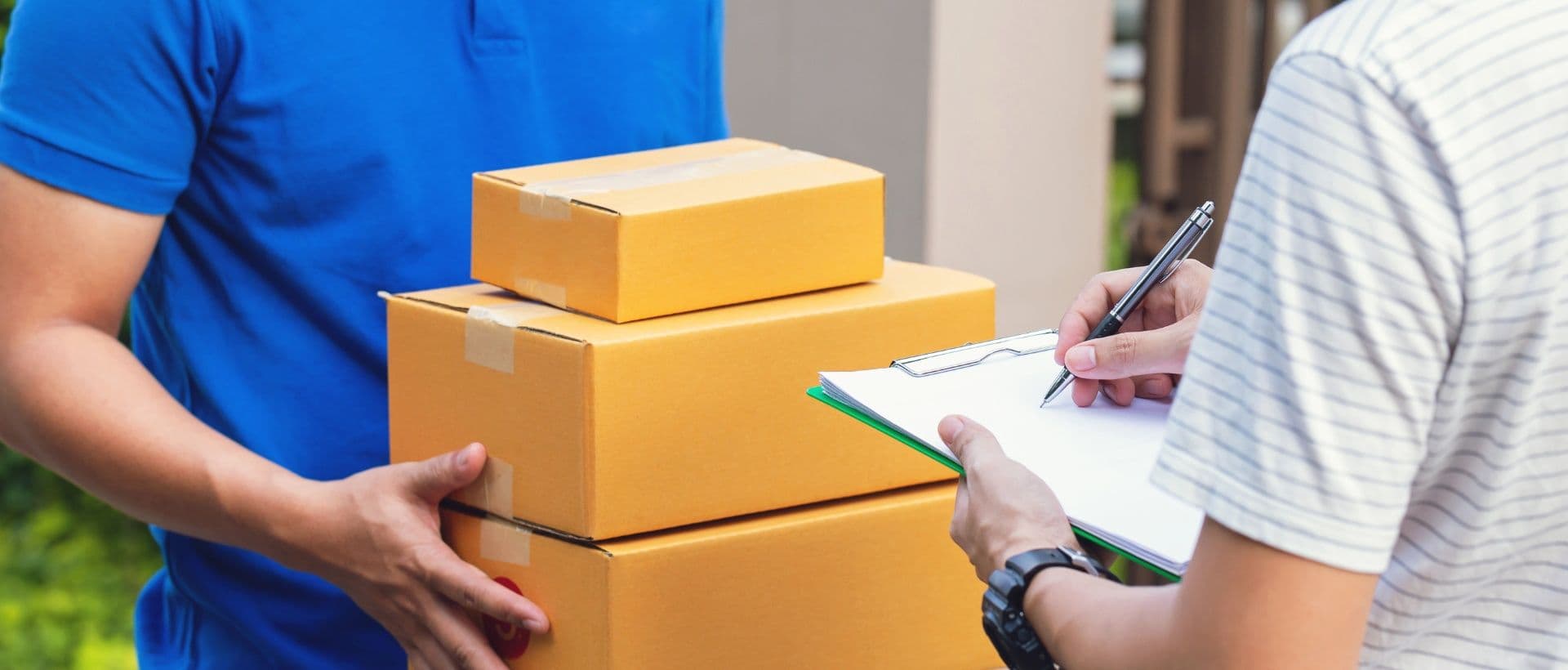
The ecommerce delivery process ends when a shipment is delivered and confirmed. The customer receiving the package is verified through Proof of Delivery (POD). APOD helps the business remain accountable and resolve any potential disputes that may arise.
Physical signature verification has always been traditionally employed; however, digital delivery verification is the norm in the contemporary digital world. The method of POD can vary between logistics providers and the type of delivery, and may include digital signature, One Time Password (OTP), image of the delivered package, QR code scan, or confirmation of delivery at a GPS location.
Warehousing serves as the foundation of ecommerce fulfillment.
A warehouse is a facility where products are stored before they are sold and shipped to customers. Efficient warehousing ensures that inventory remains organized, accessible, and ready for fulfillment whenever orders are received.
As ecommerce businesses grow, warehouse operations become increasingly important. Poor warehouse organization can lead to fulfillment delays, inventory discrepancies, and higher operational costs.
For example, if an ecommerce company caters to a country like India, fulfillment centers would be established in Delhi, Mumbai, Bengaluru, and Kolkata to serve various regions efficiently.
Inventory Management is a system used to monitor and regulate inventory levels across the supply chain.
For an ecommerce business, accurate inventory data is a critical necessity, because the product on your website labeled as available must be readily available for customers to order. Systems used here manage the real-time tracking of the movement of inventory. This ensures that businesses avoid stockouts and prevent over-stocking of inventory (which can be costly, tying up working capital and product expiry).
During large sales, festive season shopping, such as Diwali, inventory levels would need to be artificially increased.
An OMS or Order Management System is at the core of any ecommerce operation.
The system tracks and manages orders, customer payments, and logistics throughout the order lifecycle. This system is essential as it ensures that customer demand is met while coordinating with various entities of the supply chain like warehouse employees and delivery partners to fulfill orders and track orders from placing to final delivery.
If, for instance, customers place an order through a channel like Amazon and the same product is also bought on the same brand's direct website, the OMS keeps inventory updated on both.
A transportation network refers to the collection of infrastructure elements like sorting hubs, distribution centers, logistics partners, and modes of transport used to get orders from a warehouse to customers. The efficiency of the entire delivery network depends on its ability to efficiently transit goods from one point to another through the various stages.
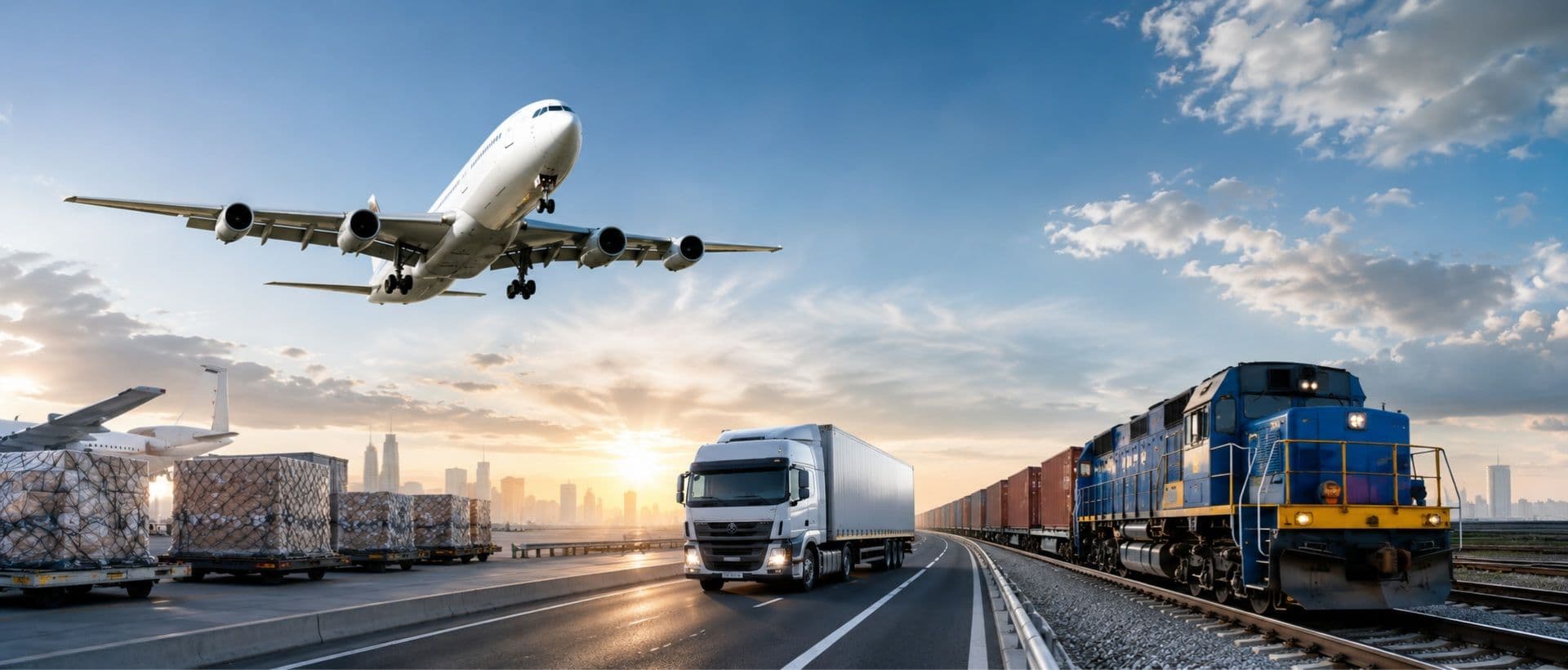
Transport in ecommerce delivery is not merely a straight journey from the warehouse to the customer's doorstep. A shipment usually goes through several distribution hubs. It might take on multiple modes of transport before reaching its final destination, like a truck for a certain route, a plane for a longer distance, etc.
For example, a shipment from Bengaluru to Jaipur may first travel via a truck from the warehouse to a regional distribution hub, then by plane or a longer train route to Northern India, and then by a local distribution network to reach the customer in Jaipur.
Fulfillment centers are often a specific kind of warehouse whose entire focus is to cater to online orders placed through an ecommerce portal.
Unlike general warehousing, they have specialized infrastructure to receive customer orders, pick and pack them, and ship out the orders in the least possible time. As soon as an online order is placed, it arrives at a fulfillment center and all of the tasks necessary to prepare and dispatch it happen there efficiently.
Dark stores are one of the newest, most critical innovations in modern ecommerce and quick commerce.
A dark store, as the name suggests, is similar to a supermarket or convenience store except for the fact that no customers can shop on premises. Its prime function is that of a fulfillment center that houses products for online orders and ensures that the goods are ready to be shipped out very quickly. By locating the stock closer to the customer, an ecommerce company can drastically cut down delivery times.
Dark stores are essential for enabling extremely fast, often less than 30-minute, deliveries that customers have come to expect through quick commerce.
Delivery partners play the last crucial role in ensuring the timely and successful delivery of packages to customers. They offer their logistics services, manage shipments during transit, and provide reliable delivery confirmation.
Delivery partners usually take care of the whole range of services required, from pick-up to final delivery, as well as handling reverse logistics. Factors to consider when partnering with delivery companies include the extent of their geographic coverage, reliability, and the technology that they support.
Tracking systems have become an essential part of modern e-commerce. Customers want to know where their package is at all times once they have placed an order. They no longer want to wait in ignorance for weeks at a time for the package to be delivered.
Tracking systems track packages as they move across the country and even the world, sending alerts and updates to both the customers and businesses. The common tracking alerts for packages are as follows:
Businesses should also have a strong strategy for returns, as the products will inevitably be sent back to the company.
Reverse logistics refers to moving the products back to the sellers, the warehouse, or the fulfillment center. Some of the reasons a customer would return a product to the business include:
Customers want their orders delivered on the same day that they placed them. Customers want the convenience of getting their product at an early date, which is offered at a slightly higher cost than other options. Same-day delivery has become most prevalent in highly populated areas and with certain types of products such as electronics accessories, food, groceries, gifts, etc.
This delivery method guarantees that customers will get their orders within about 24 hours of purchase. This delivery option is cost-effective as it offers more convenience than Standard delivery, but not as much speed and customer satisfaction as same-day delivery. Many retailers offer this service as they can often manage logistics and have sufficient stock of certain products to meet these demands. In contrast, they might not have them locally to meet same-day delivery.
This is the most common form of delivery among e-commerce retailers, and it is also the least expensive delivery option. Products sent via standard delivery arrive at the customer’s destination within 2 to 7 business days, though this time will be dependent on the carrier and the location of the customer's shipment.
Instead of relying on the normal distribution network, hyperlocal delivery uses a store, a dark store, or a micro-fulfillment center closer to the customer. Then it assigns the package to a local delivery person. If a customer purchases food, a small grocery, or medicine on a quick commerce platform, it will often be fulfilled and delivered from a dark store or local grocery store instead of the large warehouse. Hyperlocal delivery has reduced the customer's waiting time to 10-30 minutes depending on the location.
Scheduled delivery enables the customer to choose exactly when their delivery will be completed. This delivery option allows the customer to select the precise date and time they wish for their delivery to take place. It is perfect for consumers who lead busy lives and want the delivery to arrive when they are available, or when it makes sense logistically, such as with bulky or fragile items, or a large furniture item that a customer cannot move alone. Businesses and those receiving furniture often prefer this option.
Express delivery enables those customers requiring immediate products for any urgent situation. While not the most common service, it is typically prioritized over standard shipping. Many businesses offer these expedited shipping options, as the prices that they can be charged for express delivery are quite substantial.
With the in-house delivery model, businesses manage their own logistics and delivery system. It is the business's responsibility to supply and maintain their delivery vehicles, hire their own drivers, plan the routes that the vehicles will take, and oversee all transportation of goods. As the business is solely responsible, it means they also control the speed and efficiency that products are sent out at, and the customer experience that is delivered from their service.
Third-party logistics is when companies hire third parties to take care of the logistics and delivery aspects of their business, which typically means their products will be sent to a separate fulfillment center, where they will be prepared, picked, and packed, then delivered by third-party carriers. The advantage to using 3PL's is their scalability and capacity. You do not have to worry about investing in warehouse space or delivery vehicles, as the 3PL company will handle this and can scale to your company's needs.
A hybrid delivery model combines both in-house delivery and third-party logistics. This model is suitable for many businesses as it allows for operational efficiency, with the ability to manage certain aspects internally, while outsourcing other parts of the operation. A business could decide to have its own fulfillment centers and delivery vehicles while using third-party companies for its transportation and outbound last-mile delivery. This allows you to reap the benefits of owning part of your logistic operation while outsourcing the parts that are more challenging or time-consuming to control.
The customer's favorite complaint, delivery delays continue to be the top problem that consumers have with online ordering. Reasons are numerous, ranging from heavy traffic and harsh weather to supply chain breakdowns and warehouse congestion. In unexpected surge periods and with limited delivery, demand that customers are not willing to pay for, customers quickly get disappointed with late orders.
Failed delivery occurs when a package cannot be delivered to the customer during the first attempt. Factors such as incorrect addresses, customer unavailability during delivery, and delivery centers are quite common. It results in increased expenditure and disappointment for the customers.
The shipping charge accounts for the largest chunk of the operational cost of the business. The fuel prices, labor charges, packaging materials cost, etc. have also raised the prices of transportation costs, which affect the profitability of the ecommerce companies, especially if they offer free shipping services to compete.
Inaccurate inventory systems lead to considerable fulfillment problems in the ecommerce industry. It causes the inability to fulfill orders that are already processed for purchase. When the system doesn't record real-time inventory of the product that has already been ordered by customers, and the order is received, and then later, after fulfillment, it becomes clear that there is not sufficient stock left, it affects the delivery and customer relationship directly.
During festivals like Diwali and online sale events where prices are reduced to almost nothing and customers place huge orders, the entire backend gets crammed up. Without an adequate workforce and a plan in place, it is a real challenge to dispatch these huge numbers of packages as promised.
Returns are the inherent part of an ecommerce business. However, efficient return processing is a major concern for these companies as it demands adequate customer support, and it becomes problematic when more orders are shipped than sold by a business (if inventory has issues).
Customer expectations have evolved significantly over the past few years.
Modern shoppers expect more than simply receiving their products. They want a delivery experience that is fast, transparent, convenient, and reliable.
Delivery at every touch point-from processing of order and inventory management to dispatch, shipping, and delivery-has transformed from manual and disjointed efforts into a highly efficient and coordinated process through technology.
This system helps in managing the entire inventory that's stored in the warehouse and optimizes inventory storage, picking, packing, and shipping activities. With real-time updates on inventory data, the accuracy and productivity improve manifold.
The OMS platform streamlines a wide range of order management processes, including order capture, tracking of orders, managing returns, managing different sales channels, and handling various payment methods. The centralized control it provides in inventory, order fulfillment, and customer data enables it to manage an enormous volume of orders efficiently.
Transportation Management Systems improve shipping efficiency by optimizing routes, managing carriers, and providing shipment visibility. These systems help reduce transportation costs while improving delivery performance.
Advanced algorithms used in route optimization software determine the shortest and most efficient route for delivery vehicles, considering the delivery locations, traffic conditions, delivery schedules, etc. This technology also plays a crucial role in decreasing fuel consumption and overall delivery costs.
The GPS technology helps track vehicle location in real-time, thus providing customers and shipping businesses with better control and insights into shipment movements. This is vital for effective monitoring and for providing up-to-date tracking information to customers.
In warehouses, automation technologies can reduce operational bottlenecks and manual labor costs by replacing manual picks with robotic picking and automated sorting systems. These technologies continue to innovate and improve delivery performance and efficiency of the logistics.
It is the best aspect that is guaranteed through quality customer service. When customers can get their products on time and in their desirable condition, along with the ease of knowing the location of their package at any given time, this satisfaction reflects in their overall opinion of the business that served them. Consider a customer who ordered for their birthday and the product reached them well within the time and without any damage to them.
A key aspect of growing the revenue of a business is not about attracting more and more customers but by ensuring they come back. A satisfied customer who receives their order on time and without any fuss will return to do more business. If a business is always on time with delivery for its customers, then they never feel the urge to explore alternative online shops and keep coming back again and again.
Customers generally have their decisions fixed about buying a particular product. But the issues related to shipping charges not being visible at the start and a long waiting period to get it shipped make customers leave the website without making payment even for their chosen items. While offering low-cost shipping, customers feel secure and confident to go ahead with making their purchase.
Each positive delivery makes a brand's reputation grow stronger. A customer usually shares their delivery experience with other users through social networks or word-of-mouth. Customers share reviews based on their own experiences, be it the positive one or negative, and it significantly shapes the opinion of prospective clients. It is the delivery boy who is the sole face of a brand for most online buyers when it comes to meeting.
It is not always possible to beat the competitors with product quality or price, as the products that you sell may be available everywhere. Hence, businesses with efficient and faster delivery can provide their customers with an advantage, and customers are likely to pick your product based on this fact. Even the service that offers more choices, like same-day or next-day delivery, will win the deal over the competitor.
Customer lifetime value refers to the amount of money a customer gives to a business over the period of their association. A satisfying delivery experience guarantees repeated visits from customers; this makes them remain in relation with a business for a longer duration. Customer loyalty can turn them into repeat buyers who will also suggest your business to other users in their social circles.
A logistics provider directly influences delivery speed, customer satisfaction, operational efficiency, and brand reputation. Choosing the wrong partner can result in delays, increased costs, and unhappy customers.
The geographical reach of the delivery partner is the first factor to consider. The brand should analyze whether the logistics provider can serve its target markets adequately, including metropolitan cities,tier-2 and tier-3 cities, and rural areas if needed.
A strong network of coverage allows brands to expand their customer base without being limited by delivery issues.
Delivery speed expectations from customers are rising significantly. The brand should consider whether the delivery partner offers options that fulfill the customer's requirements, such as standard, next-day, same-day, or hyper-local services. Consistently achieving promised delivery times may even be more important than speed alone.
Technology plays a significant role in modern ecommerce deliveries. The logistics partner should possess features such as real-time tracking, shipment visibility, API integrations, automated notification services, and data reporting systems. This not only helps improve efficiency but also enhances customer service through clear communication.
Customers expect visibility on the status of their orders throughout their journey. Brands must select partners who have integrated comprehensive tracking systems with real-time updates, notifications, and accurate estimated delivery times.
Transparent tracking not only keeps the customer informed and relaxed but also reduces the need for customer support.
Return is an integral part of ecommerce operations. The courier partner should possess a robust reverse logistics system that ensures that customers are easily able to return products. A convenient return experience is just as influential on customer loyalty as timely deliveries.
This should be a top priority during selection. The brand must analyze the delivery partner's performance metrics such as delivery success rates, on-time delivery rate, customer reviews, and Service Level Agreements. Consistency is typically valued more than isolated exemplary performance.
The Indian ecommerce delivery ecosystem is dynamic. Technological advancements, changing customer habits, and increased competition are changing delivery systems.
Quick commerce has rapidly become one of the most influential aspects of the ecommerce industry. Brands are adopting to establish fulfillment centers within cities to decrease transit time and improve service levels. Dark stores are crucial to a contemporary ecommerce framework.
Artificial Intelligence is transforming delivery operations. AI systems can analyze real-time traffic conditions, weather patterns, historical delivery data, and customer preferences to streamline routes and enhance efficiency.
The movement toward a green delivery infrastructure, such as the use of electric vans, eco-friendly packing materials, and carbon-efficient transportation models, is being adopted by various logistics companies.
The process of ecommerce delivery is much more than getting a parcel from a warehouse to a customer's door. It is a sophisticated system that covers order fulfillment, inventory management, warehouse management, warehousing, shipping, final delivery, delivery tracking, and also the reverse supply chain.
Everything from knowing the delivery cycle of an order to opting for the best logistics system and the right delivery partner will significantly determine the experience a customer will get. Moreover, new technologies like AI, route planning and optimization, automation, dark stores, and micro-fulfillment centers are shaping the future of ecommerce logistics.
The necessity to invest in optimized and effective delivery operations is no longer a choice for the emerging ecommerce businesses. Delivery success is a strategic imperative.