How Shipment Visibility and Digital POD Help Businesses Build Trust
Read More
Loading...
November 26, 2025
AAJ Swift


Domestic Logistics in India acts as the engine of the country's economy. It connects factories, warehouses, ports, retailers, and households. When a manufacturer in Pune needs parts from a supplier in Chennai, or when someone in Guwahati puts in an order for a smartphone just after midnight, the entire chain goes to work.
Recent national studies estimate India's total logistics costs at approximately 7.97% of GDP. Functioning within that cost is an industry that employs 22 million workers and handles hundreds of billions of dollars in annual volume. The numbers indicate how incorporated Domestic Logistics networks have become. India is now number one in global logistics market growth. This blog takes a close look at domestic logistics in India.
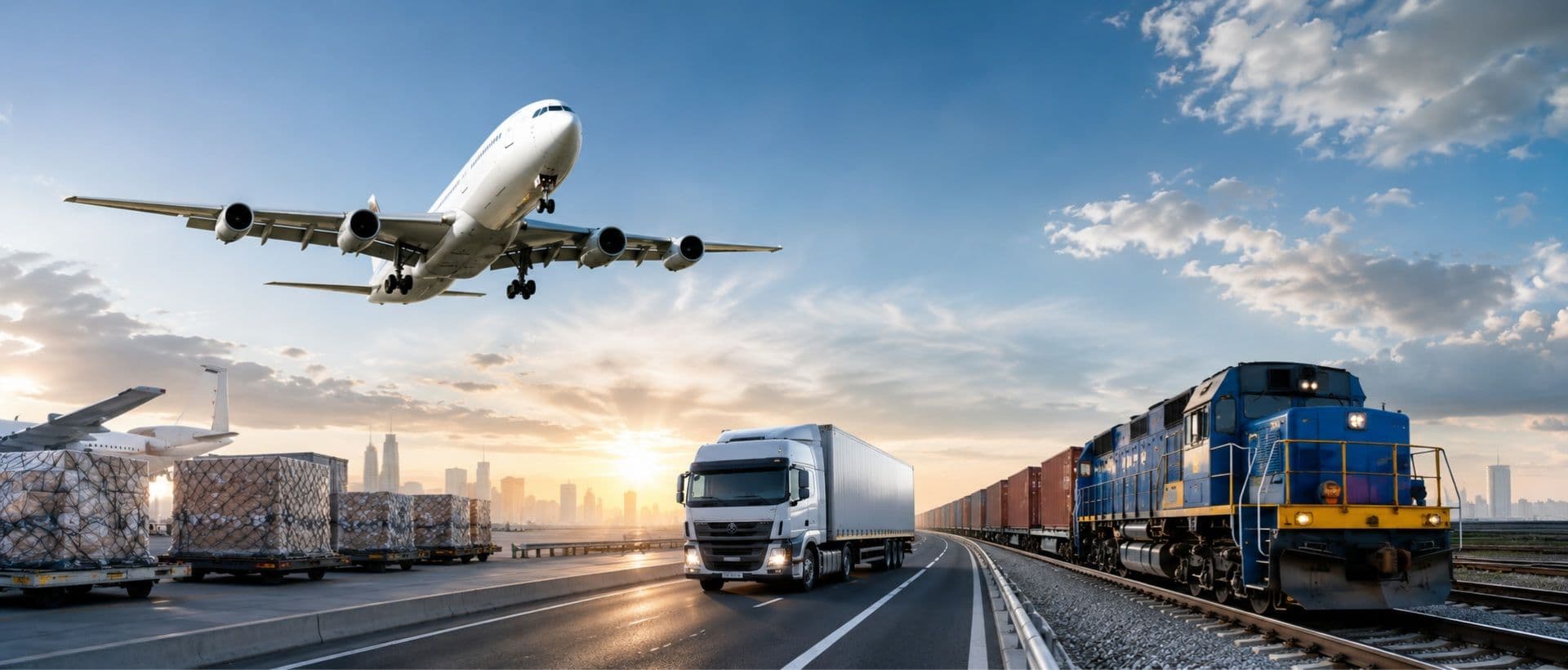
Domestic logistics services involve the transportation, storage, and handling of products throughout a nation, encompassing movement by road, rail, and air. Domestic logistics include warehousing and inventory management, last-mile delivery, and reverse logistics.
This also includes the documentation and coordination needed when goods are being transported through the internal economic regions. Stated simply, domestic logistics in India is the process of transporting goods from one step to the next until the buyer possesses them.
Speed is contingent on dependable roads, the right modes of transportation and distribution centers able to dispatch quickly. Improved connection shortens lead times and releases working capital.
When every part of the logistics process runs smoothly, companies don't need to keep extra buffer stock. This reduces losses, improves demand predictability, and ultimately lowers the total supply chain cost. Increased rail infrastructure and logistics hubs help address these gaps by meeting global standards and reducing supply chain costs.
Online retail growth has redrawn the delivery map. Retailers now need fast, dependable last‑mile delivery—not only in big cities but also in smaller towns. Warehouses are strategically located closer to demand centers, and logistics partners are also creating micro-fulfilment locations. This combination enables digital commerce to reach deeper into the country.
Domestic Logistics serve small and medium businesses by helping their products reach distant markets. Access to those national networks is essential for their scaling, brand exposure, selling to new buyers and competing on a level playing field.
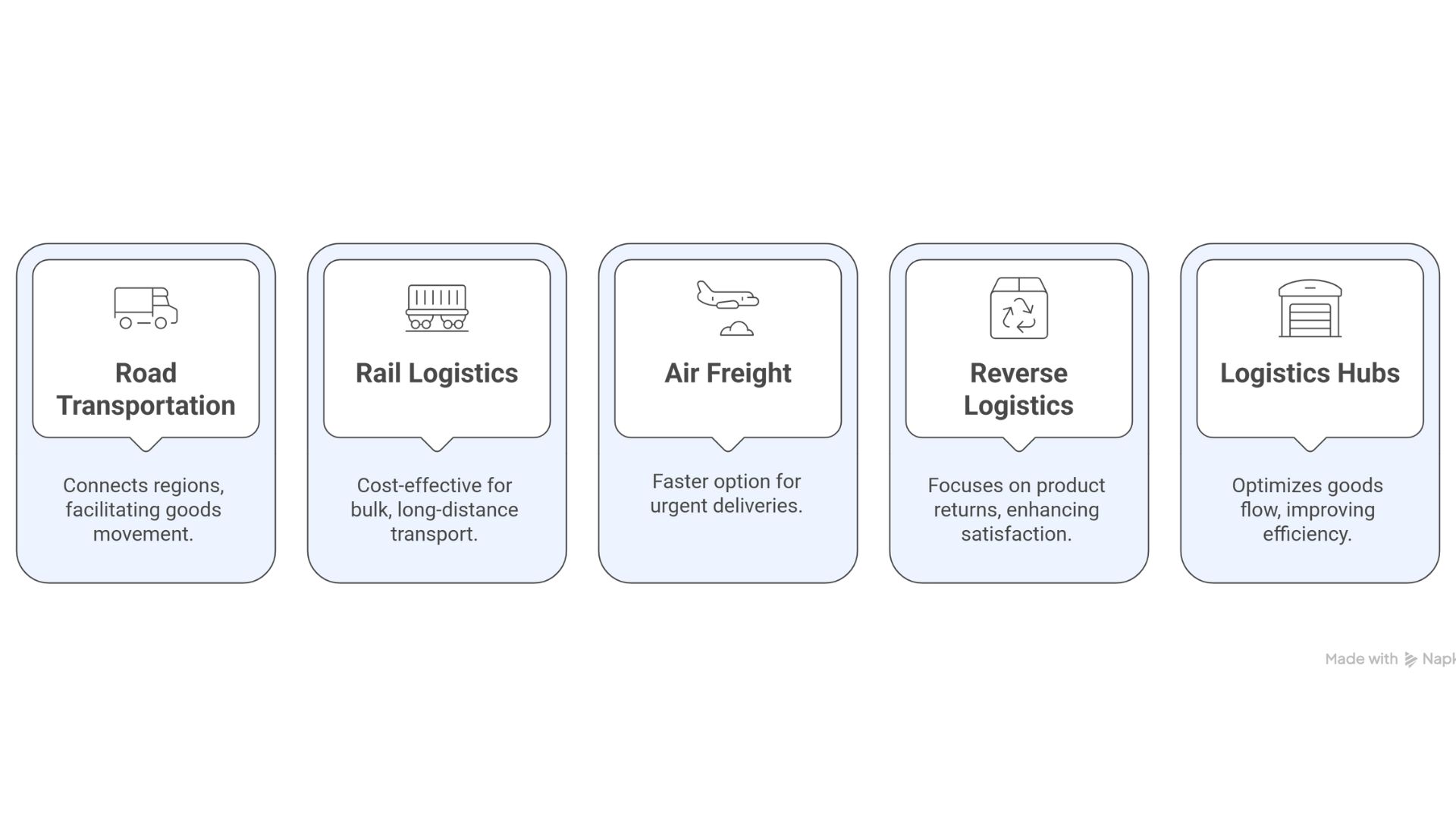
Most cargo freight in the country is transported by road. Its ability to provide direct service and flexible routing is unmatched. However, its higher per ton costs versus rail transport have driven investment into new highways that also aim to save time and fuel.
To make rail cargo handling smoother, railways are gradually becoming faster and better. A more robust rail track can reduce pressure on highways. This will also reduce the total national spending we do on logistics.
Air freight is critical to medical shipments and supports urgent industrial requirements and dynamic eCommerce and B2B shipments. Even though costs are high, air freight remains an important part of our domestic logistics system.
Returns and repairs require their own structured and intentional path. Good reverse flows are also important for maintaining customer trust and protecting value. As eCommerce volumes increase, reverse logistics is now a complex part of domestic logistics.
Logistics hubs serve as consolidation points, reducing transit portions. eCommerce is growing rapidly, and the number of ship-to-order customers is increasing. This means that logistics hubs are important to the sustainability of domestic logistics in India.
Certain regions continue to have insufficient roads or last-mile connections. Other ports lack modernized handling. There are inconsistent rail-road connections in some areas of the nation.
Despite some improvements, national shipping costs remain too high. Plans are in motion to bring the costs closer to international levels. Those costs depend on moving freight by rail and sea, as well as on unnecessary lost-in-transit.
Traffic congestion and other procedural delays can create uncertainty. Companies maintain a larger inventory level to manage risk. This adds to the costs and blocks working capital that could be used elsewhere.
The Domestic Logistics Services market comprises small competing truckers and regional carriers. The quality of service in customer satisfaction varies depending on the carrier used. Therefore, market fragmentation leads to slower tech adoption in domestic logistics services.
Small carriers still track data and deliveries of shipments. Limited digital visibility makes it difficult to track shipments or predict any kind of delays. These gaps affect the reliability of Domestic Logistics Service offerings.
Telematics, route-planning tools and automated warehouse systems improve accuracy and reduce downtime. Cloud-based digital platforms streamline documentation and help reduce empty runs. Better tech brings better control.
National programs such as the National Logistics Policy, Bharatmala, Sagarmala and the Dedicated Freight Corridors aim to strengthen capacity across modes. These initiatives support multi-modal hubs and push long-term cost reduction.
Third-party logistics companies offer consistency in services and extensive networks. Logistics aggregators consolidate demand from various shippers and enable SMEs to reach the national distribution market without incurring major costs. This evolution is resulting in a more organized and predictable domestic logistics process in India.
Costs change depending on the mode of transport, distance, shipment weight, and how quickly the shipment needs to arrive. FTL road shipments usually charge a rate per ton per kilometer, while express and PTL transport rates use either a parcel or per-kilogram rate. Other factors that affect total cost include fuel, packaging, insurance, and seasonal volume.
Transporters use a variety of pricing strategies, including per-kilogram, per-cubic-meter, and flat shipment fees. Additional charges, such as detention , handling, packaging, and returns, can also increase costs. It's a good idea to request a full estimate before confirming a reservation.
In future, better automation, smoother movement and better last-mile arrangements will be seen. Railways will soon be carrying more long-distance cargo. In addition, you can expect changes such as warehouses being set up near consumption centers. Ultimate efforts will focus on lowering the cost of Domestic logistics operations while improving reliability.
AAJ Swift offers nationwide coverage, supported by strong hubs and tech-enabled pickups. Their focus stays on B2B logistics reliability. Shippers get live tracking, automated invoicing and flexible service packages. They also maintain clear SLAs and practical pricing options. For manufacturers and retailers seeking predictable timelines and steady cost control, AAJ Swift offers a grounded, workable approach to Domestic Logistics Service management.
Domestic Logistics in India supports millions of jobs and keeps goods flowing across an enormous and varied landscape. Yet it must become quicker, more cost-efficient and more dependable. Investments in rail, highways, logistics hubs and technology will continue to reshape the sector. Companies that choose partners with strong networks, sound technology and honest pricing will gain a real competitive edge and turn logistics from a cost burden into a strength.