India's logistics sector contributes nearly 14–15% of the country's GDP, which is significantly higher than the global benchmark of 8–10%. High logistics costs directly impact pricing, margins, and competitiveness. At the same time, Indian eCommerce is expected to cross $200 billion by 2026, and B2B distribution networks are becoming more fragmented and demand-driven.
Businesses are no longer struggling only with transportation delays. They are battling:
- Inventory inaccuracies
- Poor demand forecasting
- Lack of shipment visibility
- Rising warehousing costs
- Customer expectations of same-day or next-day delivery
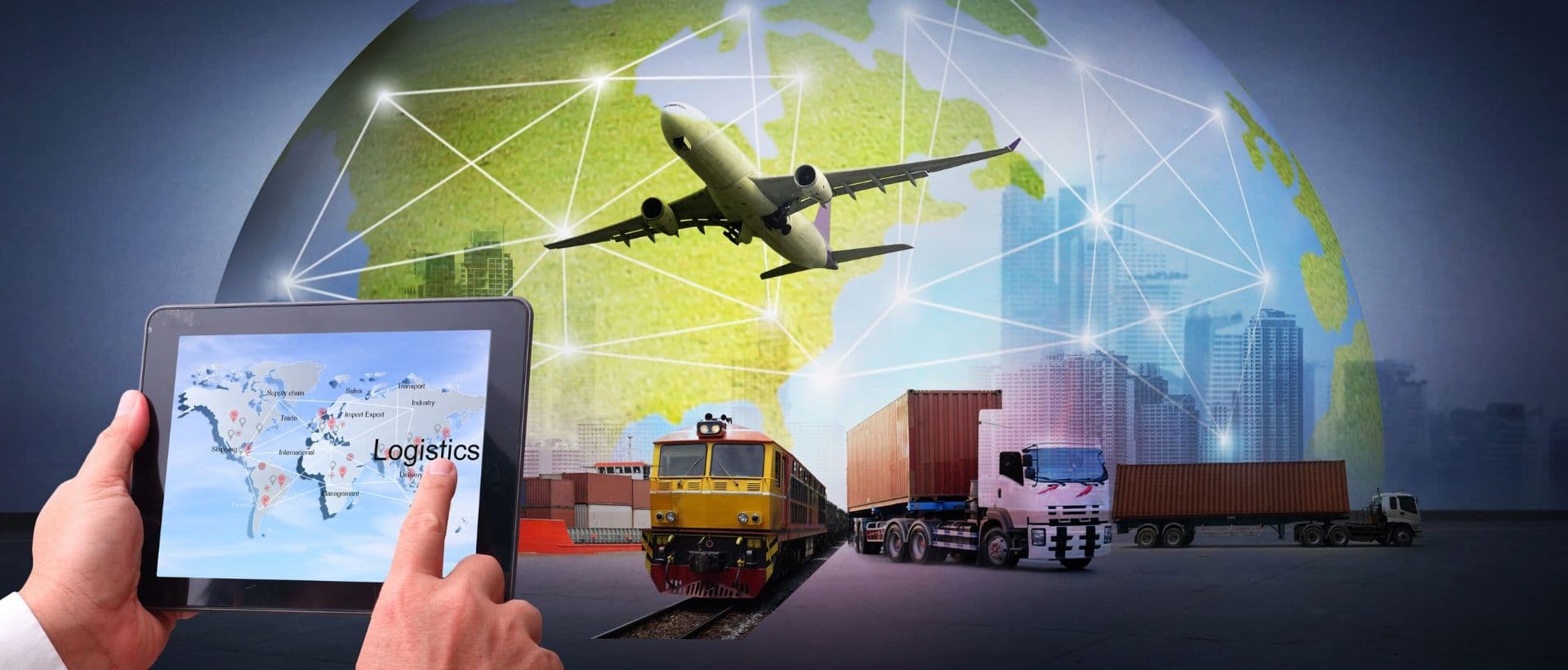
Tech-enabled logistics changes the game. It integrates Warehouse Management Systems (WMS), Transport Management Systems (TMS), real-time tracking, automation, analytics, and AI-driven forecasting into one connected ecosystem.
And today, this is not a luxury. It is a competitive advantage.
Businesses that adopt technology-driven logistics gain better control, faster decision-making, reduced waste, and greater customer trust.
What Is Tech-Enabled Logistics?
If you're still tracking your inventory and logistics with a pen, paper registers, and endless phone calls, then you're running an outdated system.
That old way of doing B2B shipping just breaks down when order volumes go up. For that, you need Tech-enabled logistics.
So, tech-enabled logistics refers to linking your warehousing, transportation, and inventory through virtual digital systems and automation tools.
With that, you can track delivery trucks on a screen instead of calling drivers. You know your exact stock levels without having to walk into the godown to count boxes. The software handles the basic tracking with real-time updates.
Key Components Included In Tech-Enabled Logistics
To make a complete tech-enabled logistics system, you need to have the following tools:
- Warehouse Management Systems (WMS): A big warehouse without a WMS is a total mess. It maps the warehouse floor. So, when a customer buys something, the software tells your staff exactly which shelf to walk to. They don't waste time searching for products.
- Transport Management Systems (TMS): It assigns vehicles and calculates the best driving routes. It groups orders by pin code so your trucks can follow the route and deliver them more efficiently, without wasting fuel or time.
- Enterprise Resource Planning (ERP) Integration: Your warehouse team and your accounts team need to share order details. ERP software connects them. When a worker ships an order, the businesses can see it on their screen instantly and generate the bill right away.
- Barcode & RFID tracking: Manual stock counting causes errors, which the barcode system can simply manage. A worker scans a tag, and the tag is updated in the main database within a second.
- IoT-enabled fleet tracking: IoT means placing smart sensors on your trucks. It does more than GPS. If you are shipping frozen goods, a sensor tracks the temperature. If the AC breaks, you'll be notified immediately.
- AI-based demand forecasting: Based on past sales and market trends, with AI software, you can get an estimate about which products need to have more stock before a festival sale.
- Automation and robotics: Huge warehouses now rely on physical machines. Automated belts sort the packages on the fly, doing the heavy lifting so things move much faster. It reduces physical labor and speeds up packing and sorting.
- Data & Analytics: You can check your sales, shipping performances, and on-time delivery, etc., metrics in one dashboard.
Core Benefits of Tech-Enabled Logistics
These are some of the major benefits of a tech-enabled logistics over the manual way of doing it:
- Real-Time Visibility: No, you don't need to call the driver numerous times to ask his location. You can check the GPS data in your dashboard. If a truck breaks or any issue occurs during loading, the system flags it and notifies you.
- Improved Inventory Accuracy and Lower Carrying Costs: Warehouse space is expensive. You lose money if you store products that don't sell (dead stock). Software tracks your stock perfectly and helps you make better decisions.
- Faster order fulfillment & reduced SLA breaches: Customers want fast delivery. Automated systems help your team pack boxes faster. Trucks leave the warehouse earlier, and once your delivery is on time, you keep buyers happy, which increases brand trust.
- Data-driven decision-making: You can't afford to make decisions based on your gut feeling or any blind guesses. If your dashboard shows that a specific transport vendor damages 5% of your fragile goods, you cut them off. You can make choices based on actual numbers.
- Cost optimization using analytics: Software can find areas where you are wasting money. For example, packing a small item in a large box incurs additional shipping charges because of the item's higher volumetric weight.
- Ease in scalability: A team that relies on Excel sheets for manual entry can't smoothly ship bulk orders with multiple vendors. They struggle if orders jump from 200 to 2,000. A digital system can easily scale and process the orders.
Challenges in Implementing Tech-Enabled Logistics
Here are four major challenges that make it hard for an old logistics company to add Tech-enabled services to its workflow:
- High Initial Investment: Software licenses, fast internet, GPS, computers, wifi, and barcode scanners cost money. One has to pay for all of this upfront, which is hard for small and medium-sized businesses.
- Resistance to Change: Employees get used to their old routines. For example, a warehouse manager who has used physical registers for the past 15 years will hate using a new tablet. So, training is required, which again takes time and money.
- Integration Complexities: You might already use billing software. Connecting your old systems to the new B2B logistics software and syncing data in real-time is hard.
- Data Security & Compliance Risks: Digital supply chains hold customer addresses and company financial records. You have to buy good cybersecurity tools to protect this data from hackers.
Why Tech-Driven Logistics Is Important in India
The Indian market is highly complex, and relying on manual work is like being on a slowly sinking ship. Here is the reason why:
- Multi-tier distribution networks: For shipping products to a final retail store or customer, you need to go through various hub points and local distribution. So, you need a digital tracking system to monitor goods across all these middle steps.
- Tier 2 & Tier 3 expansion: Half of online orders now come from small towns and villages. Finding addresses in these areas is tough. Smart routing software and GPS data are the only ways a delivery guy can deliver goods on time.
- Infrastructure variability: Indian roads are unpredictable. The highway is fine today, but it may be flooded tomorrow due to sudden rain. Software should adapt to these changes and automatically calculate backup routes for your trucks.
- GST-driven warehouse consolidation: Companies used to have small godowns everywhere. After GST, businesses are building massive, central warehouses. And you can't run a giant facility without proper WMS software.
- Rapid D2C growth: Customers will reject a Cash on Delivery (COD) order if the box is late by a single day. High Return to Origin (RTO) rates kill profit margins. For that, faster dispatch and delivery are needed, which can be easily achieved with good management software.
- Government initiatives are accelerating the shift: The government is moving everything online. Dedicated Freight Corridors are speeding up the delivery times. On top of it, FASTag and e-way bills have been adopted nationwide.
Future of Tech-Enabled Logistics in India
Technology has changed modern logistics in the last two decades. However, it will not stop growing, and you will see the following future trends in tech-enabled logistics services:
1. AI and Predictive Supply Chains
Software will predict delays days in advance. If bad weather is going to hit a specific state, the system will guide the necessary warnings.
2. Robotics and Hub Automation
Order volumes are getting too large for manual labor alone. Many large B2B transport companies are switching to robotics to scan and route packages more efficiently.
3. Hyperlocal and Micro-Fulfillment Centers
Businesses are now nailing down 10-minute delivery services. For that, brands will open more small, dark stores right inside city neighborhoods. This makes delivery faster and on time.
4. End-to-End Digital Ecosystems
Indian logistics are moving to paperless services. Factories, transport companies, and retailers will share data on the same cloud networks. Everyone will track the product from start to finish from a single dashboard.
Conclusion
Tech in logistics isn't just a tool to make the workflow faster, but it becomes a survival tool for this fast-growing logistics industry.
So, when you put digital systems into your service, you're building a safety net for a smarter, more efficient logistics system.
However, if you think software is just an optional upgrade, you are literally handing your customers over to competitors who have already switched to a fully digital experience.
So, if you want to see what a smooth, digital supply chain looks like? At AAJ Swift, we help businesses build smart, tech-driven supply chains that deliver faster.