How Professional Transport Services Improve Business Operations in India
Read More
Loading...
May 23, 2026
AAJ Swift


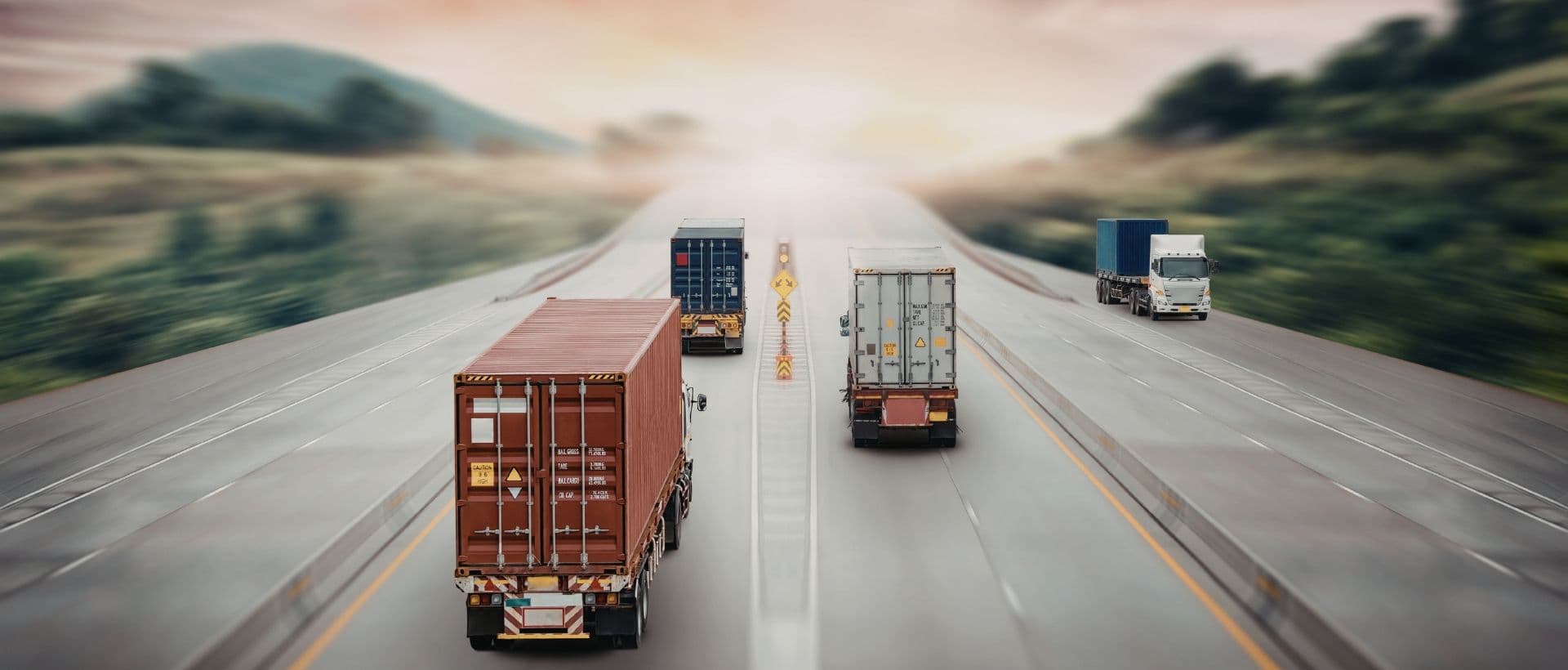
Running a B2B business in India is hard. You spend months locking in a massive client. The product is perfect, and pricing is sorted. But then comes the actual nightmare, such as getting 500 cartons from your factory to their warehouse without getting damage or delay.
Thus, when logistics break down, you don’t just lose time. You lose cash. On top of it, you lose clients too.
So, as a business owner, you have to know how to make it work in the best way possible. With this article, we will break down all common reasons why your supply chain fails and how you can fix it without burning too much cash.
The truck is loaded and leaves your warehouse. For the next 3 days, your only option is to rely on the driver’s word. However, in most cases, they either don’t pick up your calls, or their phone will be unreachable, or they give you false details about their current location.
Your client calls you asking for an update. You have nothing to tell them. If the shipment is delayed because of a broken axle or a heavy traffic jam, you only find out when the client starts calling you 100 times about the update. This leads to poor client satisfaction.
Forget calling drivers every time for every B2B shipment. A basic GPS dashboard fixes this instantly. Just tell your transporter that live tracking is mandatory for your loads. This way, if there’s a massive jam on the highway, you can warn your clients about it.
A big buyer wants 1,000 units of your best product. You check the office Excel sheet that says you have 1010 units. You confidently say yes! But your godown manager finds only 950 because the physical register wasn’t updated.
You either face embarrassing stockouts and lose sales. On top of it, you order more stock than expected. Then you end up with boxes of dead stock gathering dust in a corner.
Throw away the spiral notebooks or even the Excel sheet, as it slows down your growing business. You need a modern Warehouse Management System (WMS). Partners like AAJ do this natively, using barcode scanners to keep your physical boxes and digital numbers 100% synced.
In logistics, prices never stay the same. Fuel charges, tolls, and festive rates can easily double your shipping rates overnight. There is also a situation where your truck gets stuck outside the client’s gate for a whole day, and the transporter hits you with a massive detention charge.
You can’t do business if you can’t predict your costs. You might negotiate a deal with a 15% profit margin. But because freight rates shot up that specific week, transport eats up 12% of that margin, and your profit margin suddenly drops to 3%.
Don’t book trucks on the spot market every single day. Build long-term contracts with a B2B logistics service for 3 to 6 months, or even a year.
In most of the urban cities like Delhi and Mumbai, the real delays usually happen right at the city borders. They have strict “No-Entry” timings for heavy commercial vehicles. If your truck reaches the border at 8 AM, and the police won’t let it enter until 9 PM. That’s 13 hours wasted. In addition, an expired E-way bill or GST error can also cause trucks to get stuck at borders.
If you are supplying raw materials to a factory, your delay can stop their factory line. They will pass that financial loss right back to you as a penalty, or simply buy from a competitor next month.
Dispatch schedules need to be built around city No-Entry timings. Moreover, make sure the paperwork is flawless before the engine starts. On top of it, keep your bulk stock in a large and local warehouse, if possible, as it makes last-mile deliveries much shorter and faster.
Scaling issues usually hit you right when you get a massive bulk order, or during peak season when order volumes triple in a week.
Your setup with one small godown and five workers works fine for 100 orders. But when 1500 orders drop randomly, this becomes a nightmare. This also increases the chance of making mistakes like putting the wrong labels on boxes.
Stop trying to build permanent infrastructure for temporary spikes. Use a scalable 3PL partner. They give you the superpower to use extra space and extra manpower only when you actually need it.
Think about how many people touch a single order. The factory guy, warehouse staff, transport broker, driver, and the client’s receiving team.
Every new contact or touch increases the chance of a mistake or getting damaged. For example, the warehouse guy is sending an email while the driver and transport manager are using a WhatsApp group.
Put everyone on a single cloud dashboard. When the truck leaves, the system automatically pings the client’s receiving team with an ETA. No manual calls needed. Less manual message-passing means fewer human mistakes.
Returns hurt pockets more than forward logistics. There are numerous reasons for a return, such as damaged goods, clients ordered the wrong specs, or your team dispatched the wrong inventory.
Because reverse logistics is hard, companies ignore it. The boxes sit in the client’s godown for months, ruining your relationship. When they finally come back, they are dumped in a corner and forgotten. That is dead cash that could have been repaired or resold.
Create a totally separate, strict process for returns. Don’t mix it with your outbound dispatch team. Or let your logistics partner handle it so they can pick items up quickly, do a quality check, and get them back into your active inventory.
You would be shocked at how many huge B2B companies still run on paper registers. Soon, the owner gets excited and buys a 10 Lakh rupee software system. But the ground staff find it too complicated and hate it.
Without tech, you can’t see or analyze the trends. You can’t see where you are bleeding money. And the worst part is that you have to depend on your senior staff's memory or registers. And what if they quit the job? This will make your entire supply chain full of chaos.
You shouldn’t buy the tech only, but you should also hire someone to train your staff on how to use it perfectly. You can also provide a simple mobile app in their local language and train them patiently.
A resilient supply chain means your business’s daily operations won’t freeze in case of surprises. If a local B2B transport union suddenly calls a strike or a client drops a massive order, you can easily ship it.
Here is exactly how you build that kind of stability:
Moving bulk cargo across India is never going to be completely stress-free. But it really shouldn’t be a daily nightmare either.
We have seen great brands losing their top buyers all the time. Not because the product was bad, but simply because the dispatch was a total mess. And it hurts to lose money like that.
So, you need to come up with all these challenges if you want your company to survive the competition. The top in your list should be: stop doing things the old way. On top of it, stop trusting things in registers or on calls. Adopt a clean software-based management system to see what is actually happening.
And if managing transporters is distracting your team from actual sales, just hand it over to someone like AAJ. Let the logistics experts handle the road. Get your quote now.