How Professional Transport Services Improve Business Operations in India
Read More
Loading...
April 14, 2026
AAJ Swift


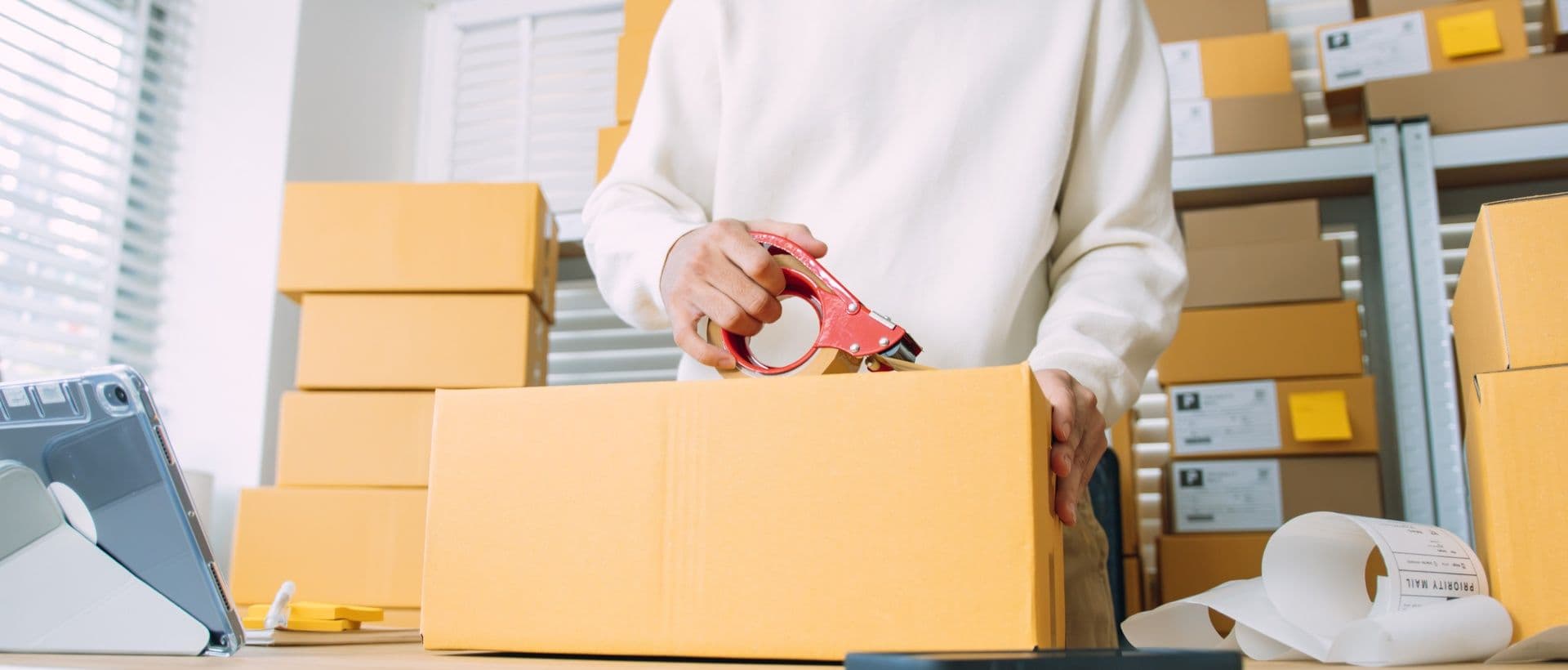
When you click a buy button on any e-commerce platform like Flipkart, Meesho, or Amazon, the item is delivered directly to your doorstep. It is one of the simplest examples of doing B2C logistics and shipping.
Behind that single tap for placing an order, a full B2C logistics system is activated. It includes a warehouse management system for sorting/packing for the last-mile delivery.
Now, let’s look in detail at how B2C logistics and shipping work and how they affect your online business.
B2C (Business-to-Consumer) logistics is the complete process from receiving an online order to delivering it to the individual shopper’s address.
In other words, marketing makes consumers place orders, while logistics actually makes the money. If it fails at delivery on time, your customer satisfaction goes down, which again hurts your brand image.
It comes down to three things. Speed. Cost. Condition.
Hit all three, and you get a repeat customer. However, if you miss one, you may end up with an angry customer.
The following are the steps and processes involved in B2C logistics shipments:
Once a buyer places an order for a t-shirt, the logistics work starts. In India, orders are either placed as prepaid or postpaid.
Prepaid involves online payments via cards and UPI apps, while postpaid primarily involves cash collection in person (also known as COD). This phase confirms the delivery address and successful payments.
Your inventory management software immediately blocks that specific t-shirt from the available stocks. A worker is assigned to pick up that t-shirt from a specific section of the warehouse or fulfillment center.
The product is then brought to the packing area. It is mainly done for two main reasons: first, to make it secure for transit, and the other is to deliver a pleasant unboxing experience.
Workers either use boxes or sealed plastic bags (in this case, plastic bags make more sense). The system then generates a shipping label that includes contact details and barcodes. It is then stuck on top of the package to make it ready for shipping.
B2C Logistics transport partner arrives daily to collect the outgoing orders. These boxes move through various regional sorting centers before arriving in the destination city.
Then comes the final hurdle: the last mile. A local delivery executive loads it onto a bike or van. They navigate through narrow lanes, call the customer, and deliver it to them along with proof of delivery (POD).
What if that t-shirt is too small for your customer? The customer clicks on the “Return” button on the app.
Now, the whole process turns backward. A guy has been assigned to pick up the returned t-shirt at your customer’s address.
The pickup guy also does a Quality Check (QC) inspection to ensure it isn’t damaged (or swapped with an old pair). If it passes, it is returned to the business’s warehouse or fulfillment center.
Selling directly to consumers is a totally different shipping experience. Every customer is unique, so are their expectations. This is why you must be aware of these key features of B2C logistics:
During the Diwali rush or a Big Billion Days sale, your daily orders might jump from 200 to 5,000 overnight.
A proper B2C supply chain should not crash when this happens. It scales as demard spikes. Warehouses should bring in temporary staff, and the logistics partner should maintain the delivery speed.
We have all been addicted to quick commerce. People are switching massively to 10-minute deliveries. So, waiting 7 days for a t-shirt feels like a long time.
Similarly, if your page says “Delivered in 7-10 working days,” most buyers will not order. Thus, speed is no longer a luxury. It is the baseline to survive for online businesses.
India doesn’t always have a perfect road structure. This makes last-mile delivery more time-consuming. It also includes dealing with traffic jams, monsoon waterlogging, and customers who aren’t picking up calls.
If you sell clothes or shoes online, expect a return rate of 20% to 30%. It is just the cost of doing business.
Your logistics setup must be able to process these reverse logistics pickups quickly. If a customer is waiting 15 days for a refund because your warehouse hasn’t processed the return yet, they will never buy from you again.
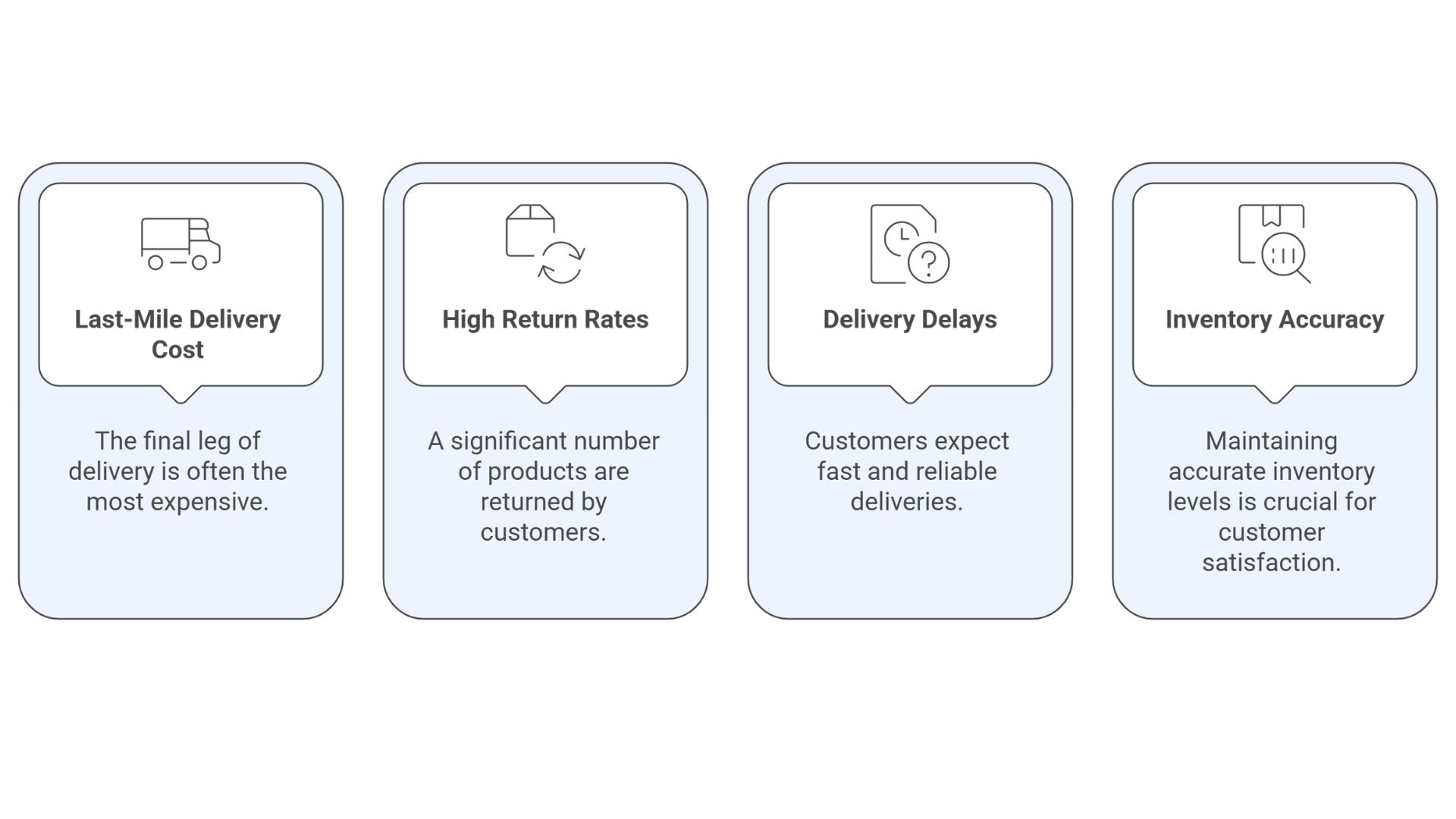
B2C logistics looks smooth on an Excel sheet. In reality, moving physical goods directly to customers is very difficult. Here are some of the challenges:
That final bike ride from the local logistics hub to the customer’s doorstep nearly eats 20-40% of your shipping cost. Fuel prices, vehicle maintenance, and paying the delivery riders make the last mile painfully expensive for any brand.
RTO (Return to Origin) is the biggest nightmare for Indian e-commerce. A customer places a COD order just for fun. When the delivery guys show up, they refuse to pay or provide an incorrect PIN code.
The product comes all the way back. As a brand, you just paid for forward shipping and return shipping, and you made zero money. That’s a total loss.
Trucks are machines, and they can break down. Highways get blocked or jammed. Flights and trains get delayed due to fog.
These conditions can delay the shipments, which again makes the customer angry. This also floods your WhatsApp support number with requests for updates.
Ghost stock kills brands. This happens when your website says you have 10 units left, a customer buys one, but the warehouse shelf is actually empty.
This might be because they were damaged or previously miscounted. Now you have to call a paying customer and cancel their order, which again gives a terrible image of your business.
Here are the following pointers that let you choose the right B2C logistics partner for your business:
If you’re receiving a few orders per month (less than 50), then a simple aggregator app might work for you.
But if you are scaling up to thousands of orders, you need a serious fulfillment partner like AAJ SCM.
You need a partner with an actual warehouse in major cities with robust warehouse infrastructure and management. On top of it, a trained workforce that can process massive orders.
If you sell premium goods in major Indian cities like Delhi NCR and Mumbai, you need a partner that offers same-day or next-day delivery.
You should ask whether they deliver in tier-3 cities or rural India, and what their pin-code reach is.
Do not work with a B2C logistics company running on manual spreadsheets. You need a partner that has an API based integration system for your online store.
The second an order drops on your platform, it should show up on their warehouse screen. The system also needs to send a live tracking link to your customers. This builds trust.
At the end of the day, B2C logistics isn’t just about moving boxes. It is your brand’s physical handshake with the customer.
So, whether your storefront looks incredible or your products are top-notch. But it doesn’t matter to the buyer if they received damaged goods or were delivered a week late.
That’s why nailing your shipping strategy changes the whole game. You can also change your logistics and shipping approach by partnering with us.