How Professional Transport Services Improve Business Operations in India
Read More
Loading...
December 13, 2025
AAJ Swift


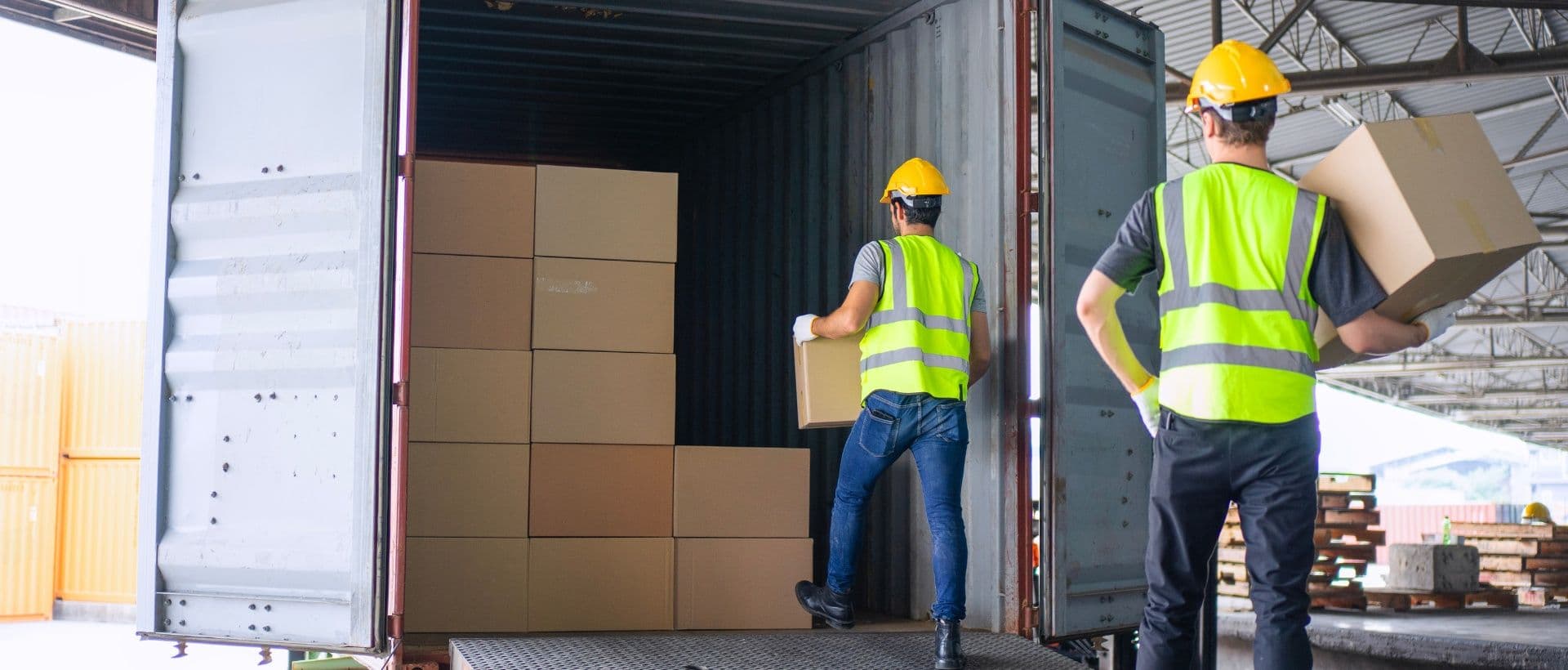
If you are running a business in India that ships physical goods, you have probably faced a situation: Is this load big enough to book a full truck, or should I book a partial truckload?
In general, if your shipment is too heavy for a parcel service like Blue Dart or Delhivery, sending 2,00 kg by courier would wipe out your profit margin. But in other cases, if the package is too small to fill a big 32-foot container truck, you'll end up paying for a lot of empty air.
For years, businesses had no choice but to bear these costs. But with modern logistics, you can now book a Partial Truck. It is called Partial Truckload (PTL).
Think of PTL as a carpool for your cargo. You share the truck with other businesses, you share the cost, and your goods usually travel more safely and faster.
So, how PTL actually works, and how you can take advantage of PTL and save your profits without getting a headache.
In simple terms, Partial Truckload allows you to book a part of a container/truck. You aren't renting the whole vehicle, you're just renting a "slot" inside it.
Imagine a standard 32-foot Single Axle (SXL) truck.
In this case, you only pay for the 10 feet you used.
Many people in India confuse Partial Truckload with standard LTL, but there is a massive difference in how they move.
1. Standard LTL (The Hub System): In this, goods are picked up by smaller trucks and then taken to a local logistics hub where they are unloaded, sorted, and reloaded onto a big truck for the shipment. This process continues (in reverse) at the destination state/hub.
The risk: Every point drastically increases the risk of damage or misplacement.
2. Partial Truckload (The Direct Route): True PTL tries to avoid the hubs and mainly deals with semi-dedicated shipments and less handling. The truck picks up your goods, picks up the other clients' goods, and drives directly to the destination city.
The benefit: Your goods stay on the truck. They aren't getting shifted or unloaded in any median warehouses or hubs.
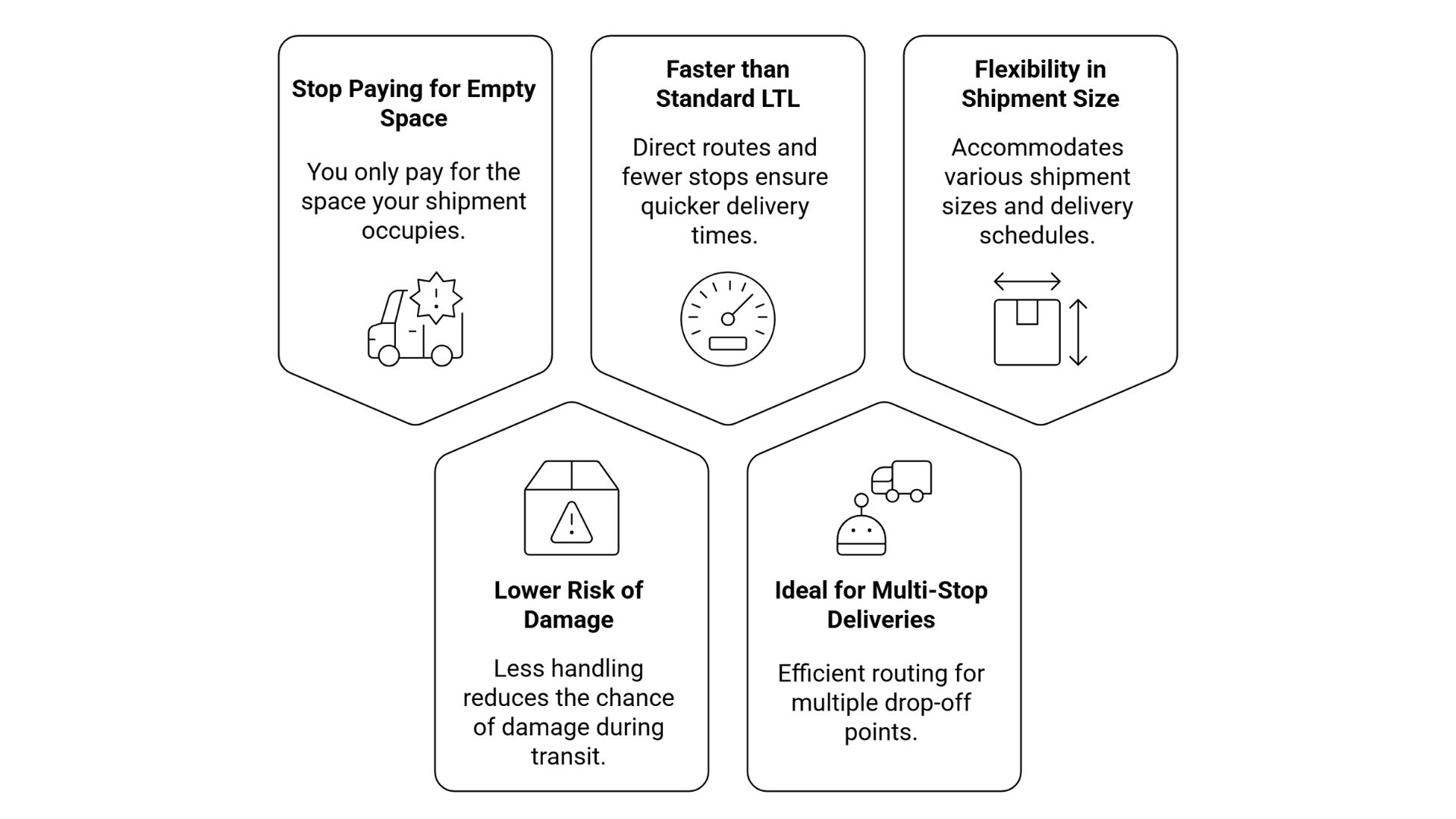
There are three main reasons why Indian businesses are switching to Partial Truckload:
In a Full Truckload (FTL) scenario, the transporter charges you a fixed rate for the vehicle, say ₹45,000 for Delhi to Mumbai transport. It doesn't matter if you put 100 kg or 7 tonnes in it; the price is the same.
In PTL, the cost is split. If your goods occupy 25% of the truck, you might pay around 30-35% of the full truck rate (the slight premium covers the transporter's effort to coordinate). You save money instantly because you aren't paying for the empty space.
If you are shipping electronics, machinery, or fragile consumer goods, standard LTL is risky. Indian road conditions are tough, and labour at trans-shipment hubs often lacks expertise to handle different types of packages.
Since Partial Truckload usually follows a "Point A to Point B" model without unloading midway, your pallets stay strapped in place for the whole journey.
Standard LTL shipments can take 8–10 days to move across India because they spend days sitting in warehouses waiting to be sorted and undergo multiple loading/unloading times.
PTL transport moves at nearly the speed of a full truck. Once the truck is loaded and leaves the city, it keeps moving. A Delhi-Bangalore run that takes 9 days by LTL might take only 4-5 days by Partial Truckload.
If your business ships goods throughout India, PTL has a massive advantage. So, instead of hiring three different couriers for three cities, you can book a single Partial Truckload B2B logistics service to deliver all goods. This not only saves money in hiring a full truck for each city but also fuel.
With FTL, you have to hold goods in your inventory until you have enough to fill the whole truck. Otherwise, you only lose money on your shipments. This also decreases customer satisfaction who want faster deliveries.
On the other hand, with Partial Truckload, you're not bound to a specific size or frequency. So, whether you want to ship 1 tonne or 3 tonnes, you have options. Moreover, the faster you deliver to your customer, the quicker you get the cash. This increases healthy cash flow and releases the stress over "minimum volume" requirements to ship.
Booking a Partial Truckload shipment isn't as instant as booking a cab, but it is straightforward if you know the steps.
You need to be precise here. Transporters need two things:
Note: PTL is sold by space, so if your pallets are not stackable, you will be charged for the space all the way to the roof.
You place the order with a B2B transport company or carrier. They act as a matchmaker.
They look at their network and see: "Okay, we have a truck going to Chennai. We have 15 feet of space left. Does this client's load fit? "
A truck (usually a 20-foot or 32-foot container body) arrives at your factory. You load your goods. The driver secures them.
The driver will likely stop at 2 or 3 other locations to pick up the remaining cargo before hitting the highway.
The truck travels to the destination city. Since it is carrying goods for multiple people, the driver will make multiple stops for delivery.
In a case, let's say, if you are the last stop on the route, then you might have to wait a few extra hours while they unload the other shipments first.
Once the package leaves the destination hub for final delivery, both sellers and customers are notified. It is either a regular SMS or a notification in the seller's dashboard.
In addition, after the product is delivered, the delivery agent might ask your customers to e-sign or take a photograph as proof of delivery.
PTL is great, but it is not perfect. Here are the things you need to watch out for to avoid frustration.
This is the most common complaint. A Partial Truckload will not leave the origin city until it is profitable, meaning, until it is full.
If the transporter has picked up your goods but hasn't found enough cargo to fill the rest of the truck, the vehicle might sit in the warehouse for 24 hours. You need to build a 1-2 day buffer into your planning for this.
While big tech-logistics startups now offer GPS tracking, many traditional transporters still operate manually. You might have to call your account manager to find out where the driver is. It is improving, but don't expect all local logistics companies to be the same.
Since the goods are moving on a highway, you must have a valid E-Way Bill. Because the truck carries goods for different companies, the paperwork must be perfect.
If your paperwork contains an error, the tax officer can detain the entire truck, delaying everyone else's shipments as well.
If you want to start using Partial Truckload, follow these three rules to ensure a smooth operation.
Don't send loose boxes. Put your goods on a standard pallet and wrap them tightly with shrink wrap. This ensures your "slot" in the truck is defined, and your goods don't get mixed up with the other guy's cargo.
Because the transporter needs to "match" loads, you will get a better price if you are flexible. If you say, "It must go today at 2 PM," you will pay a premium.
If you say, "Pick it up anytime between Tuesday and Wednesday," the transporter has time to find a match and can offer you a cheaper rate.
PTL works best on busy routes.
Partial Truckload is the smartest logistics evolution for Indian SMEs. It bridges the gap between expensive couriers and wasteful full trucks.
By understanding that you are paying for "space" rather than "weight," and by preparing your goods correctly, you can cut your shipping bill by 20-30% while getting your products delivered faster and more safely.
We at AAJ Swift all offer an industry-level PTL service with 99% on-time delivery. So, don't wait and get your quote now with very competitive pricing.